

Car Paint Protection Film Dubai
Paint protection film (PPF) for protecting high-impact vehicle paint areas from stone chips, light scratches and road contamination.
Car Paint Protection Film (PPF) in Dubai: Coverage, Installation and Paint Protection
Paint protection film (PPF) is a transparent or finish-specific protective film applied over painted vehicle panels to reduce damage from common road hazards such as stone chips, light abrasion, insect residue, bird droppings and other surface contamination. The result depends on the film selected, paint condition, coverage, panel preparation, edge finishing and installer technique.
PPF is most useful on areas that receive repeated impact: front bumper, bonnet, front fenders, mirror caps, door edges, rocker panels and other exposed sections. Full-body coverage extends protection to more painted surfaces, while front-end packages focus on the highest-risk zones.
Some modern PPF products include self-healing top coats for fine surface marks under appropriate heat conditions, but this is product-specific. PPF should not be described as scratch-proof or stone-chip-proof because sufficiently severe impact can still mark the film or underlying paint.
What Is Paint Protection Film and What Does It Protect?
Paint protection film, commonly called PPF or clear bra, is a protective urethane-based film applied over vehicle paint. Its main job is to absorb or reduce damage from stone chips, light scratches, scuffs, insect residue, bird droppings and road contamination before those hazards reach the clear coat beneath.
PPF is not scratch-proof or chip-proof. A strong impact can mark or penetrate the film, and deeper damage may require panel-level film replacement. Self-healing is also product-specific: many modern PPF top coats can recover from fine surface swirls or light scratches with warmth, while deeper cuts will not disappear.
Coverage can be targeted or comprehensive. Common high-impact areas include the front bumper, bonnet, front wings, mirror caps, rocker panels and door edges. Full-front packages protect the main road-facing panels, while full-body PPF extends protection across most painted exterior surfaces. The right coverage depends on driving conditions, vehicle value, paint condition and budget.
PPF vs Ceramic Coating vs Paint Correction: Which One Solves What?
PPF provides physical impact protection. It is the best fit when the main concern is stone chips, road rash, scuffs and light surface damage on exposed painted panels.
Ceramic coating provides surface behaviour rather than impact absorption. It can improve gloss, water beading, contamination resistance and washability, but it does not replace PPF for rock-chip protection.
Car polishing and paint correction remove or reduce existing paint defects. They address swirl marks, oxidation and suitable clear-coat imperfections before protection is applied. They do not create an impact-resistant barrier.
For vehicles that need both paint correction and long-term protection, the sequence is normally inspect → clean/decontaminate → correct suitable defects → install PPF → add compatible coating if required. A professional detailing assessment helps determine how much preparation the paint needs before film installation.
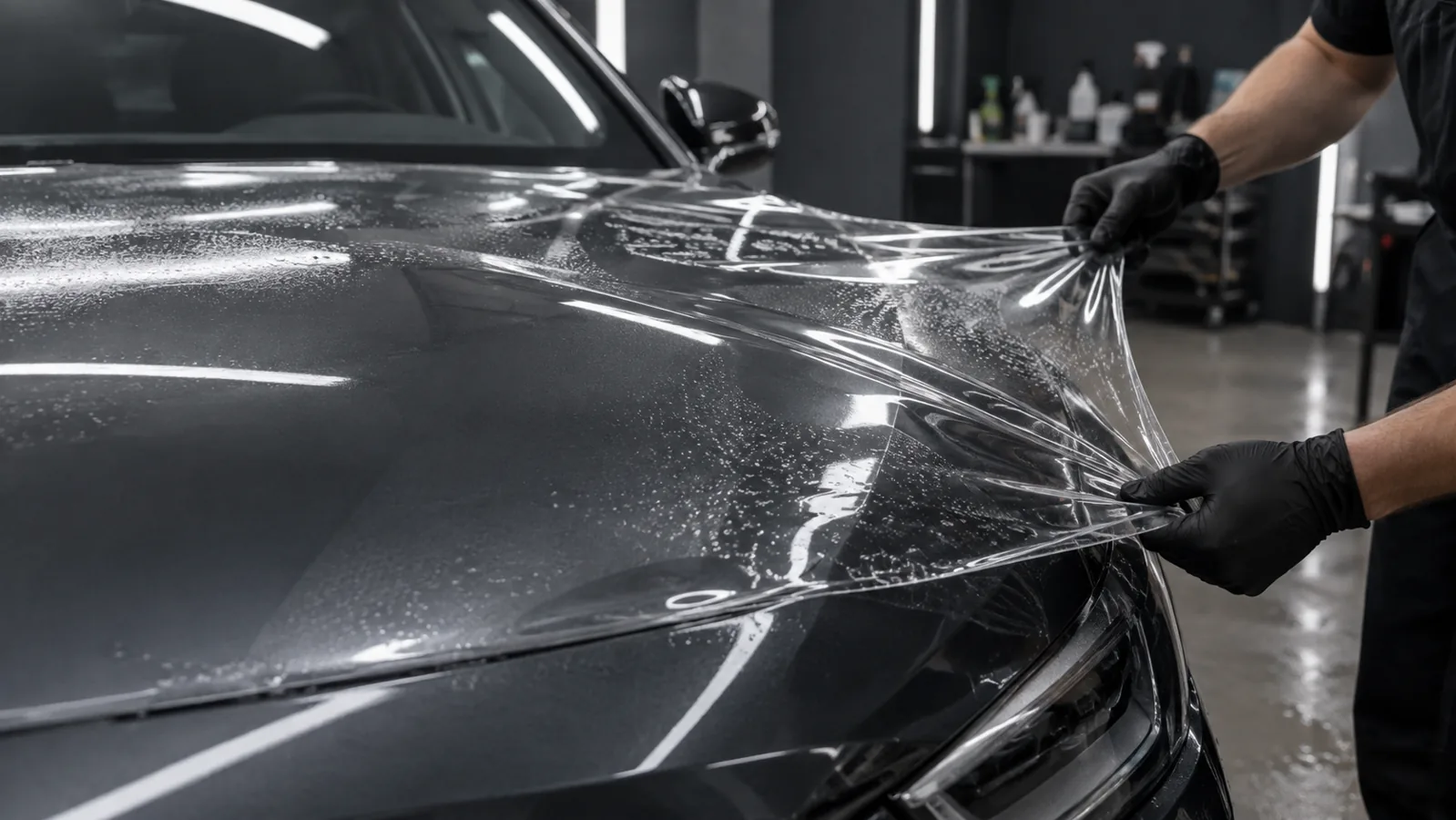
How PPF Is Installed: Paint Preparation, Film Fit and Edge Finishing
A reliable PPF installation starts before the film touches the car. The paint should be inspected for chips, repainting, oxidation, contamination and swirl marks. The vehicle is then washed and decontaminated, and suitable paint defects are corrected where needed because film can preserve visible imperfections underneath it.
The installer then confirms the required coverage and fits the film to the panel using the appropriate pattern or installation method. Alignment around badges, sensors, panel gaps and complex curves matters because stretched or poorly positioned film can create visual distortion or lifting later. Installation solution is squeegeed out carefully, edges are finished, and wrapped edges are used where the panel and film system allow them.
After installation, the film needs time to settle and cure. Small moisture pockets or haze can be normal during the initial curing period, but aftercare should follow the instructions for the specific film installed. Avoid aggressive washing or high-pressure water at film edges until the installer confirms the safe wash period.
PPF should be professionally removed when replacement is required, especially on repaired or repainted panels. Paint history matters because aftermarket paint can behave differently from original factory paint during film removal.
Frequently Asked Questions About Car Paint Protection Film (PPF)
Does PPF stop stone chips completely?
No film can guarantee zero damage from every impact. PPF is designed to absorb or reduce damage from common road debris, but a sufficiently hard or sharp impact can still mark or penetrate the film.
Does paint protection film self-heal scratches?
Some PPF products have self-healing top coats that recover from fine surface swirls or light scratches when warmed. Deep cuts, punctures and damage that passes through the film will not self-heal and may require film replacement.
Should I choose full-front or full-body PPF?
Full-front PPF targets the panels that usually receive the most road impact, such as the bumper, bonnet, front wings and mirrors. Full-body PPF extends protection across most painted panels. The better option depends on how the vehicle is used, its paint condition, value and budget.
Can ceramic coating be applied over PPF?
Yes, when the coating is compatible with the installed film. A compatible ceramic coating can improve water behaviour, gloss and cleaning, but it does not replace PPF’s physical impact protection.
Can PPF be installed over repainted panels?
Potentially, but repainted panels need extra assessment. The paint must be properly cured and well bonded, and removal risk can differ from original factory paint. Tell the installer about any repainting or body repair before installation.
How should PPF be maintained?
Use regular careful washing, remove bird droppings and insect residue promptly, and avoid directing high-pressure water closely at film edges. Follow the care instructions for the exact PPF product installed.
How long does PPF last?
Service life varies by film, exposure, installation quality, maintenance, mileage and environmental conditions. Ask for the exact product name, manufacturer guidance and applicable warranty rather than relying on a generic lifespan claim.
How much does PPF cost in Dubai?
PPF pricing depends on the vehicle, selected film, paint preparation and coverage. A high-impact package costs less than full-body coverage, while complex body shapes or correction work can increase installation time and cost.